Author: rozee cutrone

  • 1960s Sydney: A tale of magic, horror and humour

    1960s Sydney: A tale of magic, horror and humour

    Pilot Episode : THE VIGGILANTI SISTERS

    Limited Series : URBAN GOTHIC TALES

    CODA:

    Australian migrant histories, urban communities,

    Karma, transformation, redemption, coincidence, time.

    Social satire, horror-thriller, Gothic whimsy, farcical

    tragedy, magical realism, historical realism, coming-of-age,

    A darkly funny coming-of-age, magical realist narrative – set against an urban gothic, historical realist backdrop of 1960s Australia. This series features obscure underground sixties music, Australian fashion, food, habits, popular culture, politics, and notorious historical figures.

    SYNOPSIS:

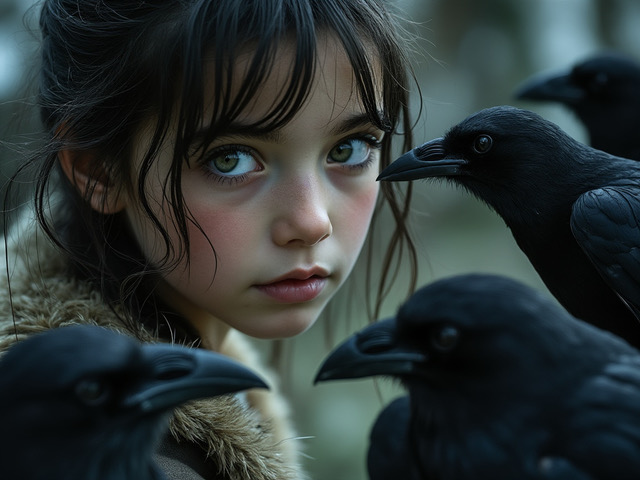
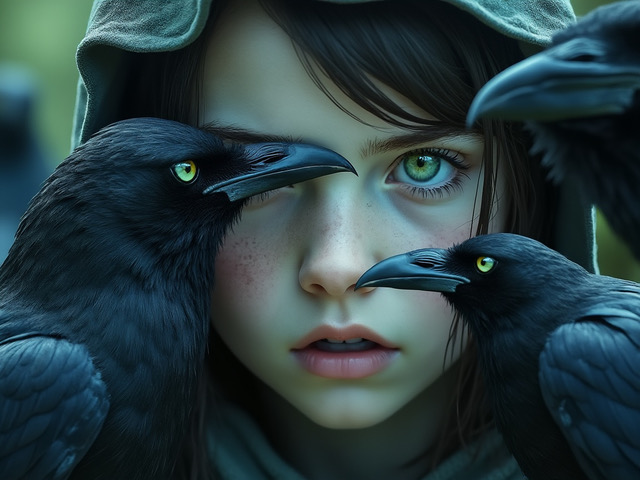
    Lucia and Viviana Viggilanti are the tween sisters, the daughters of an Italian immigrant couple, growing up quickly in the grimy inner-city suburb of Rozelle in 1960s Sydney. The children are blessed (or cursed) with special gifts.

    Remnants of the 1950s are still parked on the streets, and on display in dusty shop windows. This is not a nostalgic backdrop; it’s dark , a Gothic urban landscape. A dirty, cruel, crime-ridden blue-collar neighbourhood. Men are dockworkers, truckers, shopkeepers, crims or fucked up Korean war veterans. There’s no street prostitution, it’s all indoors, and everybody knows it. Women gossip in hushed tones outside grocers or before church on Sundays.

    Luz and Vee’s parents are working class Italian immigrants. Carlo works at the White Bay docks as a longshoreman, working 7 days a week on rotating shifts. Silvia is a housewife who works from home as a seamstress. Silvia’s parents live in the same street, right next door.

    The Irish-Italian catholic community is tight, but racism is acceptable. It’s a ‘friendly jibe’ (“it’s just a joke, you can take a joke, can’t ya?)”. Aboriginal Australians are visible, but the broader city culture and population still reflects the White Australia Policy and is strictly selective about skin tones and eye shapes. Racism is embedded in the common vernacular .

    People from the suburbs flock to the city on weekends and the Rozelle/Balmain precinct is one of the main gateways to town. Here, traffic jams are common as the Glebe Island Bridge periodically rises, and ships and boats honk as they pass underneath.

    It’s not unusual to find yourself standing next to Lenny McPherson or some other shady gangster at the local corner shop. Sticky caramel Cobbers are 3 for a cent…that’s 15 for 5 cents. Kid’s ears are pricked to the sound of falling change, outside the TAB and the local pubs & bars, where mangy dogs wait faithfully on the curbsides for their belligerent owners.

    It’s a time when good priests do home visits. Everyone has secrets, even a priest, and dedicated nuns run schools to recruit as much as to educate.

    The opening scene

    It’s a hot late spring. Luz, who is 12, and Vee, who is 13, take a shortcut. They go through a laneway behind the main street. They’re on an errand for their mother, Silvia. In the laneway, they witness the horrific sight and sound of a dog being mercilessly beaten with a leather strap. The abuser is a drunken Korean war veteran. Vee yells for him to stop, but he doesn’t. He’s lost in a sadistic rage on the helpless animal. Luz is an emotional and compassionate child with an unshakable sense of justice. She impulsively picks up a chunk of broken brick and hurls it at the man from behind to distract him. She scores a direct hit to the back of his head…he goes down hard, hitting the gutter like a sack of sand.

    The bull’s-eye shot shocks Vee and Luz but Vee acts fast. She’s the thinker; a problem solver who is protective of her hot-headed little sister and good at damage control. She runs to the man to see if he’s ok and feeds him a story of what has occurred. Luz, still amazed by her direct hit follows.

    Vee asks the man if he’s ok as he lies semi-conscious on the ground. She tells him a crow swooped down and knocked him off his feet.

    The man struggles to stay conscious as blood oozes from his head and trickles into the pebbled ground but he doesn’t believe her. He grumbles in pain, too injured to argue. Luz supports Vee’s lie. She then turns her focus to the injured dog. The dog immediately responds to Luz’s warmth and gentle concern. Vee sees the man is seriously injured. She calls out for help. Her cries attract the attention of a small crowd of locals who appear from back doors and a street nearby.

    The girls repeat the lie to the approaching adults, who appear to accept it as the truth. No one notices Lucia and Viviana Viggilanti sauntering, then running down the lane with the little dog trailing them a short distance behind.

    They continue to the shops with Vee coaching Luz on the lie – in case they need to tell it. again. They don’t notice the little brown mangy dog behind them at first, but realise it’s there when it follows them into a shop. The Greek shopkeeper, Mr Stanos, yells at them to get it out.

    Luz is glad the dog has followed them and wants to keep it. Mr Stanos asks where they found it. Vee lies and says it’s the first time they’ve seen it. Luz agrees. Luz feels sorry for the dog and tells Stanos it’s starving.

    Vee buys her mother cigarettes and a packet of flour. She tells Luz they have enough change for a tin of ‘Champ’. This news lifts Luz’s mood.

    Mr Stanos regrets his severe reaction and gives them a bag of caramel Cobbers,which cheers Luz up even more.

    On the way home the dog runs ahead to a butcher’s window and sits salivating at the meat. Luz follows and cups her hands to look through the window for her friend May. May is the butcher’s daughter and she hasn’t been to school for a week. Luz and Vee are the only girls who talk to her at school. She’s always dirty and her unkempt hair smells like meat.

    The butcher emerges from a back room wearing a bloody apron, holding a meat cleaver. He leers at Luz through the window and Vee pulls her away. They pretend to walk up the street but duck into to a side gate beside the shop. They have to unlock it from the top to get through. The little dog follows.

    Vee puts down the string bag, and they sneak down a pathway all the way to the rear of the butcher shop. The path leads into a neglected yard full of old equipment. Luz picks up a small pebble and throws it at a first-floor window that has a child’s tattered sunflower drawing taped to it. It’s their missing friend May’s room, but there’s no response.

    Meanwhile, Vee snoops around the yard. She finds May’s favourite doll discarded in a bin full of bloody sawdust and paper. Vee and Luz are surprised. They know May loves the doll. She even named it after her mother, Ivy, who has been committed to the local, notorious, Callan Park mental asylum for years.

    The dog sniffs around the yard and digs at a spot behind an old outdoor loo without the sisters noticing.

    The girls hear a noise and run back up the path. They retrieve the groceries and stuff the mangled doll in the bag. Then, they sneak onto the street and race home with the little dog in tow.

    They enter a back gate and run across a lush yard to a back door entering a neat kitchen. Their mother, Silvia, is sewing in the living room on a pristine Singer machine. They plonk the groceries on the kitchen table, and all three boisterously enter the living room.

    Silvia screams at them about the dog. She tells them to get it out of the house and take it back where they found it. The girls beg and plead with Silvia to keep it, promising to take full responsibility. After some serious emotional manipulation, Silvia’s resolve weakens, and they take the dog out to the yard to bathe it.
    while washing the mysterious creature, the girls discover the dull brown dog is actually black and glossy. after some discussion, they decide to name the dog ‘Shadow’.

    Silvia finds a matted, dirty doll in the grocery bag and appears at the back door with it. The girls lie and say they found it on the street on their way back from the shop. They tell her doll belongs to their friend May who’s missing. They tell their mother that it’s May’s favourite doll, that it’s named after May’s mother in the nuthouse. Silvia reminds them to keep away from May. The family’s situation makes Silvia uneasy. The girls defend May and guilt trip Silvia.

    Silvia is surprised to see the dog magically transformed. The once dull brown mangy mess, is now a stunning, shiny black creature, glowing like satin in the sun. Shadow is unrecognisable. Shadow even appears to have magically changed breed. She takes a thick piece of thick red satin ribbon from her pocket and the girls tie it as a perfect bow around Shadow’s neck.

    Later in the evening, a full moon hangs low in the sky and crickets chirp softly in the Viggilanti’s yard. Silvia sits on Carlo’s lap at the table in the kitchen. Dinner leftovers are still on the table. The girls are in bed with Shadow sleeping peacefully on a large pillow between them.

    In the kitchen, a radio plays 60’s Australian grunge in the background. The music is interrupted by the evening news,

    ‘A war hero has died from his injuries, after being found semi-conscious in a lane in Rozelle, witnesses say he lost his balance when swooped by crows…’

    Silvia remarks how dangerous the streets are getting and changes the station, searching for music.

    Carlo reminisces about a dog he had in Italy when he was a child. They get up to clear the table together, still engaged in warm discussion. They embrace and kiss tenderly, dancing slowly, cheek-to-cheek to a romantic tune. Carlo switches off the light and they dance in the moonlight.

    End of Pilot.

    NB: The pilot screenplay is written

    Any interest in a collaborative development of this series, please leave your contact details.

    ©RCutrone2024

  • Protected: “I’m gonna reset your soul”… (encounters with a covert narcissist)

    This content is password-protected. To view it, please enter the password below.

  • Love

    Have I ever loved anyone or anything that I didn’t consider part of me.

    Is that even possible.

    Is love a feeling, an action, a belief, or a deceptive but highly successful biological function? What about duty? Is duty a kind of love? Is it a duty to ourselves and others? Is responsibility, commitment and accountability love? Does love require suffering and sacrifice? How much is enough and for how long. What about truth, is truth love?

    Is mercy love, is forgiveness love, is pity love?

    Is lip on lip, skin on skin, in skin, love,

    Is cleaning shit love? Will you clean my shit love?

    An expression of?

    Is God love? Which God, why, who.

    When did we write our gods.

    Can you say ‘I know the spirit of love’

    Counselor; Comforter; Baptizer; Advocate; Strengthener; Sanctifier;

    Spirit of Christ (apparently not the same as the spirit of Christ with a small s) Seven-Fold Spirit of Revelations, the Spirit of Truth, the Spirit of Grace, the Spirit of Mercy and the Spirit of God, of Holiness, of Life…

    Are these the facets of love, what kind of love? Of the divine kind? Of idealised love. What does all that look like? In a person I mean.

    Can i see it, feel it, eat it.

    Will it make me sit up straight, protect me from danger, tell me everything’s alright when it isn’t.

    Tell me to let go when i don’t want to. Tell me to connect when I don’t want to. Is surrender love?

    Is righteous intention love,

    Is love an idea I have, a perception of, a drifting and shifting mood

    Like a feather in the wind.

    Are we supposed to feel it all the time, or just know it, decide it.

    Even when the days drag on and our hearts and souls are numb, and a strangers smile feels better than home.

    Is it a feeling I confused with something else along the way. Is it the joining and splitting of cells. Is its loss the cause of all sorrow and fear.

    That’s all a part of it, and I hesitate to define it in any concrete terms, in case the temptation to doubt takes what matters from me and devours it, before I’ve understood.

    I want to absorb by gnosis, into my psyche. Protect and nurture the flame as the tiny precious thing that expands a nameless eternal self into infinity, and blissfully, mercifully, merges with all the others, all the other nameless selves, as us as we.

    We, the one collective conscious thought, coming home.


    “‘I’ is born into the atomic dust, particles arranged into the cells of living organisms. Matter is our mother. Mater the portal from which I came,from the impersonal to the personal, pushes through the veil of ignorance, as ordained, as is fair, then receives a name, is assigned one of two genders, and dished its lot according to chance of birth, effort and circumstance (the Rawlsian shuffle)

    What’s love to me? Christ… Love, as a word and as an idea, is the most subjective concept on the planet.

  • jaded

    I want to be hopeful, No really I do, I want to feel grateful for everything, all the time.

    I don’t want to be disgusted. I don’t want to be repulsed, who wants that? I fight the descent into hatred and regret, I fight it all the way, I don’t want to resent. I don’t want to carry leaden memories of my little superficial successes, and the massive failures that fill my mind slowly, as a trickle of grit into a mysteriously malaligned void. I’ve learned to accept it.

    I think I know something, but say nothing. I read us like a book, but don’t want to believe I can get it so right, so accurately define this wrongness we indulge in.

    I grit my teeth at night. I gnash and grind them into a special $600 resin mold my dentist made me.

    This is a dead place. This is a meander through psychic graveyards. You in yours, me in mine, them in theirs, pretending we’re together.

    Because look, we need each other, to make bread and drive buses and serve each other and calculate futures and transfer things and build stuff and advise and defend and keep company and fuck and amuse and cry with.

    Look at me. I have a B.A .Comm in the arsed-fucked political sciences, a Master of Arts in making bullshit sound interesting, and a Diploma of Fine Arts ( FArts for short isn’t it) from the National Art School, which was in it’s East Sydney Tech phase back then, but was producing the greatest artists. Now it’s a wanky Degree course that churns out rebranded versions of the originals.

    I studied under the best who are dead.

    I want to be optimistic, inspiring, challenging.

    I want to lift the veil, turn up the volume, and say something real.

    I don’t want to be jaded.

  • How not to deal with a paranoid delusional neighbour

    I’m not sorry. I’ve apologised for years for nothing and its over.

    A delusional neighbour will blame you, as the closest dumpee available, for everything they imagine is happening to them. Over time you’ll become the focus for every slight or imposition. Everything that goes wrong in their world is your fault, and despite actual run-ins with everyone else on the block, it’s because you live next door. If someone scratches the car or a possum breaks their pot plants, it was you, they know it was, it was fucking you…you did it.

    Delusional neighbours are invested in their victimhood. They identify with it. They’ll project blame onto the closest, most convenient target and nothing sways them. If you attempt to reason with them you’re a lying psychopath. If you get angry you’re a psychopath. If you defend yourself you’re a psychopath. You need never utter a single threat, they’ll do all that for you, to you…Why? Because you’re a psychopath, and in their minds, all their abuse is justified.

    Delusional neighbours never apologise, never take accountability or accept responsibility for a single mistaken accusation, or for bullying, intimidating, and hostile behaviour.

    In a way it’s partly your fault, because you’ve apologised for the smallest imagined slights and offenses, for so long, just to avoid drama, that they come to believe their own bullshit, and they will find their projection of you, highly offensive. The person they think you are, the shit filtered version of you in their minds is highly offensive to them.

    But hey, all things come to an end. New beginnings and all that. You reach the limits of neighbourly arse-kissing. You set boundaries, you say no. You do what you have to do.

  • moreton bay fig tree

    moreton bay fig tree


    ink and watercolour on paper

  • None of this should be true

    I’m having an awesome conversation with a kid,

    and then the little boy looks at me with a furrowed brow and says in a matter-of-fact way,

    ‘my nan hates white people’

    And now, suddenly aware that in his eyes, I’m a white lady his nan hates,

    And I say that’s ok, each to their own, but you’re an individual, you can make your own decisions, right?

    he thinks about it for a second, and says ‘yeah’

    before he walks away.

    Maybe, in another place and time,

    and by that I mean another suburb tomorrow,

    this conversation takes a different turn,

    where a little boy says,

    ‘my nan hates black people’

    And a lady says why? Why does your nan hate black people? That’s racist.

    And I’m white people now, I noticed that, but years ago I was not quite white enough,

    Back before my hair turned from black to white, almost overnight it seemed,

    And I would stay in the Sun all summer long, until my skin was dark brown,

    And people called me names and spat on me until I cried.

    Back then, I was not quite white people. I was wog people then.

  • ‘At my altar, an altered image of the real is worshipped as eternal, and offered to demons in the infernal depths of a server’

    (letter to the parent pt 1)

    ©

    (Luz’s letter to the parent, pt 2)

  • ‘Before the end came groans’

    (Excerpt from working draft novelette)

    Luz woke to birdsong, backed by the nascent hum of the city that seemed a stone’s throw from the open doors of her bedroom balcony. It was warm for August. The jasmine already flowering, and the crazies were out. Twitching in the streets, arguing with unseen tormentors on their way to local charities, having spent their entire welfare payments on drugs and alcohol. It wasn’t quite spring, yet she prepared herself for another putrid Summer, when the stench of garbage mapped the cycle to another Xmas packed with useless plastic shit, made in China for the poor, the blind and the indifferent, and destined for landfill, or we’ll catch a glimpse of it bobbing in the sea.

    It was no longer cold enough to keep her neighbours indoors. She heard the loud and familiar meaningless chatter, automated scripts spilling from mouths. The mundanity of it, the repetition of identical self-created journeys into mental, physical and spiritual decrepitude. Year after year, season after season. She watched her neighbours come and go, some straight from prison halfway shelters, some homeless from mental health issues, and some raising kids on their own, similar children, who didn’t know the fun times were nearly over.

    The mosquitos hatched. They rose as ravenous wisps from the sewers at dusk.  

    Another end came and it felt sudden. She ignored the slow but obvious signs of decay, as familiar, as inevitable as sunset. An unnameable tune circled her mind. Was it Portishead or a remix of? Nothing’s new anymore. Creativity is redefined as presenting what’s old and forgotten in new and interesting ways; literally the reinterpretation and rebranding of preexistent ideas in personal brands that might strike a chord somewhere.

    A year and seven months seemed like a lifetime, except there wasn’t much grief. Overshadowed by a social media storm of another war looming in the middle east. Israel carefully cast, everything in its place, while twenty seven other conflicts were ignored, they were old news, and because this one had the most political relevance to us as a western ally. This one seemed most dangerous, the war most likely to ignite us all. The war that would lead to the dreaded but oddly desired world war that some said needed to happen, before anything fucking changed.

    The world was sick and she knew it. The minds of men are like shallow graves, and as predictable as death.  

  • ‘Adrift’

    Prose, poems, works in progress.

    ………………………………………

    Adrift in a sea of lies and dreams,

    deafened by the screaming winds of change,

    the tapered hungry howls,

    of owls that stare at rats below the trees,

    now winter’s freeze has ended.

    ………………………………………………………

    Alien me

    I live in a playground that’s almost heaven.

    sometimes hell,

    though half the time I cannot tell.

    devils stir like imps

    with unruly disregard for the flowers in my garden.

    I live amongst strangers,

    and feign familiarity,

    an alien,

    just passing through,

    standing in the shadows,

    Unencumbered by the burden of the curious.

    …………………………………………………………………….

    Snake

    That snake could have swallowed me whole, 

    her beauty bound me,

    but she only bit me.

    Still,

    her poison brought me pain and fever,

    and she came at me again and again,

    with so many hisses,

    but I loved her so much,

    I blew her more kisses.


    Like saving a dog

    Crows watch from the perch of a roof

    with intense interest.

    A man raises a leather strap

    a dog cries human tears

    a child gnaws her lip and draws a never-ending breath

    as she hurls a chunk of brick that turns gently through the air

    and time expands.

    A man falls

    with a dull and satisfying thud

    no one sees a brown dog struggle to its feet

    or hobble down the street

    with a girl so sweet

    she would kill for you.

    I think he’s bleeding

    is he breathing

    is he dead

    no not yet

    people gather

    and a crow caws ‘faaark faaark’.